
Think a Hosepipe Ban Means Outdoor Cleaning Has to Stop? Think Again.
When a hosepipe ban is announced, many homeowners understandably assume all outdoor cleaning has to stop. Whether it's a muddy driveway, algae-covered patio, dirty garden furniture or a car that desperately needs washing, it can feel as though you're left waiting for the restrictions to end.
The good news is that isn't always the case.
Many cleaning jobs can still be carried out responsibly while significantly reducing water consumption. In fact, modern pressure washers use considerably less water than a standard garden hose because they rely on high pressure rather than high water volume. Likewise, portable mobile cleaners can operate from buckets, water butts or other stored water sources, making them ideal for light cleaning tasks where mains water isn't required.
In this guide we'll explain how to continue cleaning responsibly during a hosepipe ban, how to reduce your water consumption and which Kärcher cleaning solutions can help you achieve excellent results while using less water.
What is a Hosepipe Ban?
A hosepipe ban, officially known as a Temporary Use Ban (TUB), is a water conservation measure introduced by water companies when prolonged periods of dry weather, low rainfall or increased demand put pressure on local water supplies.
The aim of a hosepipe ban is simple: to reduce non-essential water use so that enough treated drinking water remains available for homes, businesses, emergency services and other essential needs.
During a hosepipe ban, the use of a hosepipe connected directly to the mains water supply is usually restricted for activities such as:
- Watering gardens and lawns
- Washing private cars, motorcycles and caravans
- Cleaning patios, driveways and paths
- Filling paddling pools and swimming pools
- Cleaning walls, windows and other outdoor surfaces
However, the exact restrictions and exemptions vary between water companies, so it is important to check the rules that apply in your area before carrying out any cleaning.
Some activities may still be permitted, particularly where alternative water sources such as rainwater harvesting systems, water butts or stored water are used. Certain commercial activities and essential cleaning tasks may also be exempt from restrictions.
The key point to remember is that a hosepipe ban is not a complete ban on cleaning. Instead, it is designed to encourage everyone to use water more responsibly and efficiently until water supplies return to normal.
Mobile Outdoor Cleaners: A Water-Efficient Alternative
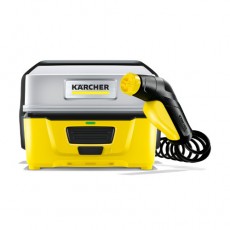
If your local water company's restrictions permit cleaning using stored water or water carried in a container, Kärcher's Mobile Outdoor Cleaner range provides a practical and highly water-efficient alternative to traditional hosepipe cleaning.
Unlike conventional pressure washers, these cordless machines don't require a permanent connection to a mains water supply. They can be used with their integrated water tank or, where supported, draw water from a bucket, trug or other suitable stored water source using an optional suction hose. This makes them ideal for situations where you want to minimise water consumption while still achieving excellent cleaning results.
The range offers different levels of cleaning performance to suit different tasks:
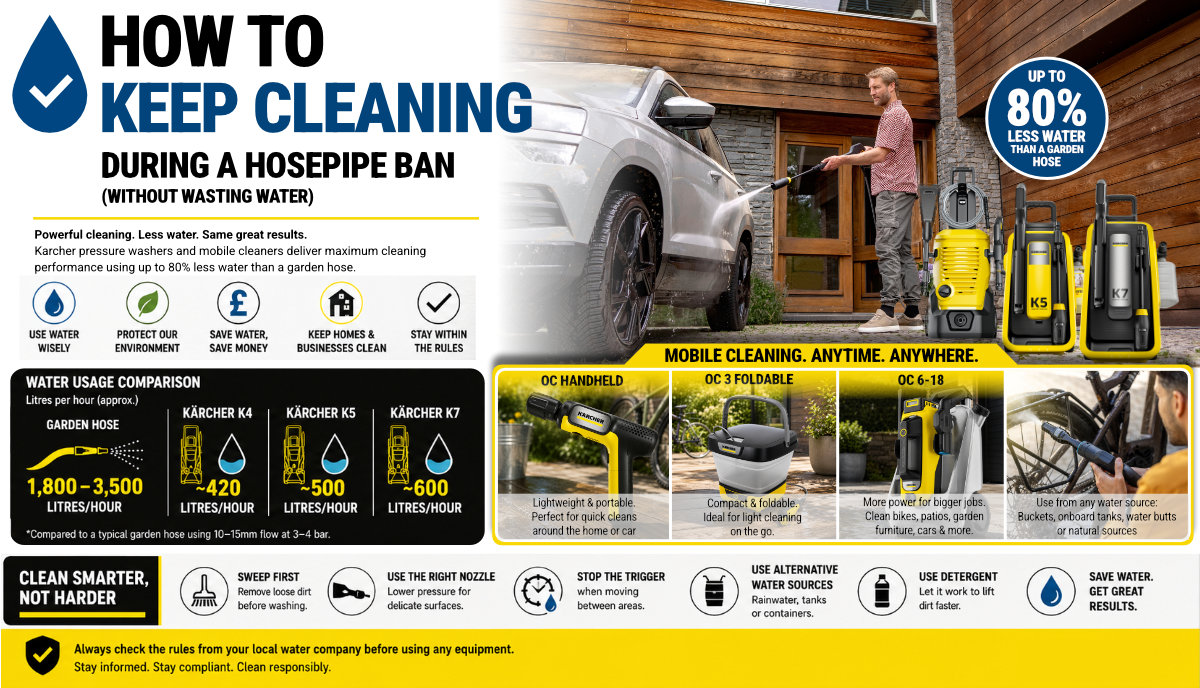
- OC 3 Foldable – Provides a gentle flow of water, similar to a household tap, making it perfect for rinsing muddy boots, bicycles, pets, gardening tools and outdoor equipment.
- OC Handheld Compact – Delivers up to 15 bar of pressure, offering a significant improvement over cleaning with a bucket and sponge while remaining compact and easy to carry.
- OC 6-18 – Produces up to 24 bar of pressure, comparable to many portable pressure washers, making it ideal for more demanding outdoor cleaning while remaining completely cordless.
Depending on the restrictions in your area, a Mobile Outdoor Cleaner can provide an efficient way to tackle jobs such as:
- Washing your car without the inconvenience of a bucket and sponge.
- Cleaning motorcycles, bicycles and e-bikes after a ride.
- Refreshing caravans, campervans and motorhomes.
- Cleaning garden furniture, barbecues and outdoor kitchens.
- Washing wheelie bins and recycling boxes.
- Removing mud from gardening tools, boots and outdoor equipment.
Because the water is delivered in a controlled, pressurised spray rather than being poured or continuously run from a hose, Mobile Outdoor Cleaners can often complete everyday cleaning tasks using significantly less water than traditional methods while producing better cleaning results.
Before carrying out any outdoor cleaning during a hosepipe ban, always check the guidance issued by your local water company, as Temporary Use Ban restrictions and exemptions can vary between regions.
Use Alternative Water Sources
Using less mains water doesn't have to mean giving up effective cleaning. One of the easiest ways to reduce your water consumption is to take advantage of alternative water sources wherever it's practical to do so. Many Kärcher pressure washers are capable of drawing water from an alternative water source, such as a water butt, bucket, trug or storage tank, when used with the Kärcher SH 5 Suction Hose Kit or another suitable feed arrangement. This allows you to make use of harvested rainwater that would otherwise go to waste while significantly reducing your consumption of treated drinking water.
Depending on the cleaning task and your equipment, there are several options available that can help you clean more sustainably while reducing demand on treated drinking water.
Rainwater Harvesting
Installing a water butt or rainwater harvesting system is one of the simplest ways to create a free, sustainable water supply for outdoor cleaning. Rainwater collected from roofs can be stored and used throughout the year for cleaning vehicles, garden furniture, patios, tools and other outdoor equipment. Many compatible Kärcher pressure washers can draw directly from a water butt when connected using the Kärcher SH 5 Suction Hose Kit, allowing you to clean efficiently without relying on a mains water supply.
Buckets and Water Containers
For smaller cleaning jobs, a bucket or trug filled with water provides a simple and effective alternative to a mains-fed hosepipe. Many compatible Kärcher pressure washers can draw water directly from a bucket or similar container when used with the Kärcher SH 5 Suction Hose Kit, while Kärcher's Mobile Outdoor Cleaners are specifically designed to operate from an onboard water tank or, where supported, a bucket or other suitable container. Both approaches provide an efficient way to clean while reducing reliance on treated mains water.
Water Tanks and IBC Containers
Larger stored water supplies, such as water tanks and Intermediate Bulk Containers (IBCs), can provide an excellent source of water for cleaning around farms, workshops, commercial premises and larger properties. Many Kärcher pressure washers can draw water from these alternative supplies using the Kärcher SH 5 Suction Hose Kit, making them ideal where a mains connection isn't available or where reducing water consumption is a priority.
Mobile Water Supplies
If you're cleaning away from home, alternative water sources can be just as useful. Water carried in campervans, motorhomes, boats or service vehicles can be used with Kärcher Mobile Outdoor Cleaners, making it easy to clean bicycles, outdoor equipment, vehicles and leisure gear without relying on a mains water connection.
Clean Smarter, Not Harder
Using alternative water sources isn't just useful during a hosepipe ban. It's an environmentally responsible way to clean all year round, helping to conserve treated drinking water while still achieving excellent cleaning results.
Whether you're using harvested rainwater, a bucket, an IBC container or a portable water tank, combining an alternative water source with a water-efficient Kärcher cleaning machine—and, where appropriate, the Kärcher SH 5 Suction Hose Kit—allows you to use less water without compromising on cleaning performance.
Always check that your pressure washer is suitable for drawing water from an alternative source and follow the manufacturer's guidance for priming and filtration. If a Temporary Use Ban is in force, you should also check the specific restrictions issued by your local water company.
Do Pressure Washers Really Use Less Water Than a Hose?
It may seem surprising, but a pressure washer can use significantly less water than a standard garden hose while often delivering better cleaning results.
The difference lies in how the water is used.
A garden hose relies on a high volume of water to wash dirt away. Much of that water simply runs off the surface without contributing to the cleaning process, particularly when tackling stubborn dirt, algae or mud.
A pressure washer, on the other hand, uses a high-pressure jet to concentrate the water onto a much smaller area. This targeted spray loosens and removes dirt far more effectively, meaning less water is needed to achieve the same — or better — result.
Water Consumption Comparison
The difference in water usage is considerable:
| Cleaning Method | Approximate Water Consumption |
|---|---|
| Standard Garden Hose | 1,800–3,500 litres per hour |
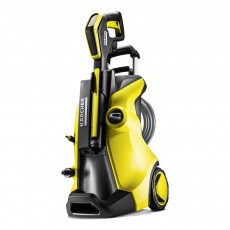
| Kärcher K4 Pressure Washer | 420 litres per hour |
| Kärcher K5 Pressure Washer | 500 litres per hour |
| Kärcher K7 Pressure Washer | 600 litres per hour |
Even Kärcher's most powerful domestic pressure washers use only a fraction of the water consumed by a continuously running garden hose.
Of course, few people spend an entire hour cleaning. However, because pressure washers remove dirt more quickly, the total amount of water used to complete a job is often reduced even further.
It's About Efficiency, Not Just Water Flow
Water efficiency isn't simply about reducing the flow rate—it's about achieving the desired cleaning result using the least amount of water possible.
Pressure washers deliver several advantages:
- Dirt is removed more quickly, reducing overall cleaning time.
- Concentrated pressure means less rinsing is required.
- Water is directed precisely where it's needed instead of flooding the entire surface.
- Stubborn dirt can often be removed without excessive scrubbing or repeated washing.
- Many cleaning tasks can be completed using significantly less water than traditional methods.
This is why pressure washers have become one of the most water-efficient ways to clean patios, driveways, vehicles and outdoor furniture.
Whether you're trying to reduce your environmental impact, lower your water consumption or simply clean more efficiently, choosing the right cleaning equipment can make a significant difference.
Did You Know?
A Kärcher K4 Pressure Washer uses approximately 420 litres of water per hour, compared with up to 3,500 litres per hour for a typical garden hose. That's why pressure washers are widely recognised as one of the most water-efficient ways to clean outdoor surfaces.
Water-Saving Cleaning Tips
Saving water isn't just about the equipment you use—it's also about how you clean. A few simple changes to your routine can help reduce water consumption while still achieving excellent results.
Sweep Before You Wash
Remove loose dirt, leaves and debris with a broom or brush before reaching for a pressure washer or mobile cleaner. This reduces the amount of water needed to remove stubborn dirt and prevents unnecessary rinsing.
Choose the Right Pressure
More pressure isn't always better. Using the correct spray lance and nozzle for the task helps remove dirt efficiently without wasting water or damaging delicate surfaces.
Deal With Dirt Early
Fresh mud, bird droppings and algae are much easier to remove than dirt that has been left to dry or become ingrained. Cleaning little and often usually requires less water than tackling heavily soiled surfaces.
Use the Right Accessories
Surface cleaners, wash brushes and foam nozzles help direct water exactly where it's needed, improving cleaning performance while reducing overspray and unnecessary water use.
Reuse Water Where Appropriate
If you have access to harvested rainwater or another suitable alternative water source, consider using it for outdoor cleaning wherever practical. This helps reduce demand on treated drinking water while still delivering excellent cleaning results.
Maintain Your Equipment
A clean filter, correctly adjusted spray lance and well-maintained machine all contribute to efficient performance. Looking after your equipment ensures you're getting the maximum cleaning power from every litre of water.
The most water-efficient clean isn't achieved by using less equipment—it's achieved by using the right equipment correctly.
Frequently Asked Questions
Can I use a pressure washer during a hosepipe ban?
It depends on the restrictions introduced by your local water company. If your pressure washer is connected directly to a mains water supply using a garden hose, its use may be restricted for certain cleaning activities. However, some Temporary Use Bans may allow cleaning using alternative water sources or include specific exemptions. Always check the guidance issued by your local water company before using any cleaning equipment.
Can I wash my car during a hosepipe ban?
The answer depends on the Temporary Use Ban in force where you live. Some water companies prohibit washing private vehicles using mains water, while others may allow certain exemptions or the use of alternative water sources. Always check the rules that apply in your area before washing your car.
Do pressure washers use less water than a garden hose?
Yes. Pressure washers typically use significantly less water than a standard garden hose because they rely on high pressure rather than high water volume to remove dirt. For example, a typical garden hose can use between 1,800 and 3,500 litres of water per hour, while a Kärcher K4 uses approximately 420 litres per hour.
Can I use rainwater with a pressure washer?
Many Kärcher pressure washers can draw water from alternative sources such as water butts, storage tanks or buckets when used correctly. Using harvested rainwater is an excellent way to reduce your reliance on treated mains water. Always follow Kärcher's recommendations regarding filtration and water supply.
Can Kärcher Mobile Cleaners be used with a bucket or water container?
Yes. Kärcher Mobile Outdoor Cleaners are designed to operate without a permanent mains water connection. The OC 3 Foldable and OC 6-18 carry their own onboard water supply, while the OC Handheld can also draw water directly from a bucket, trug or other suitable container using the suction hose supplied as standard.
Are pressure washers more environmentally friendly?
They can be. Because pressure washers use less water and clean more efficiently than a standard hose, they often reduce overall water consumption. Using harvested rainwater or another alternative water source can further reduce the environmental impact of outdoor cleaning.
What is a Temporary Use Ban?
A Temporary Use Ban (TUB) is the official name for what is commonly known as a hosepipe ban. It is introduced by water companies to help protect water supplies during periods of prolonged dry weather or exceptionally high demand.
Where can I check the hosepipe ban rules for my area?
emporary Use Ban restrictions vary between water companies and can change as weather conditions improve or deteriorate. Before carrying out any outdoor cleaning, check the latest guidance issued by your water supplier.
Not sure if a hosepipe ban applies where you live? Check your supplier using the Water UK postcode lookup tool:
www.water.org.uk/customers/find-your-supplier
Leave a Comment